Selected discoveries

From fundamental physics to the clinic

A few results that show what nanogap cavities can do. The complete record is on the publications page.

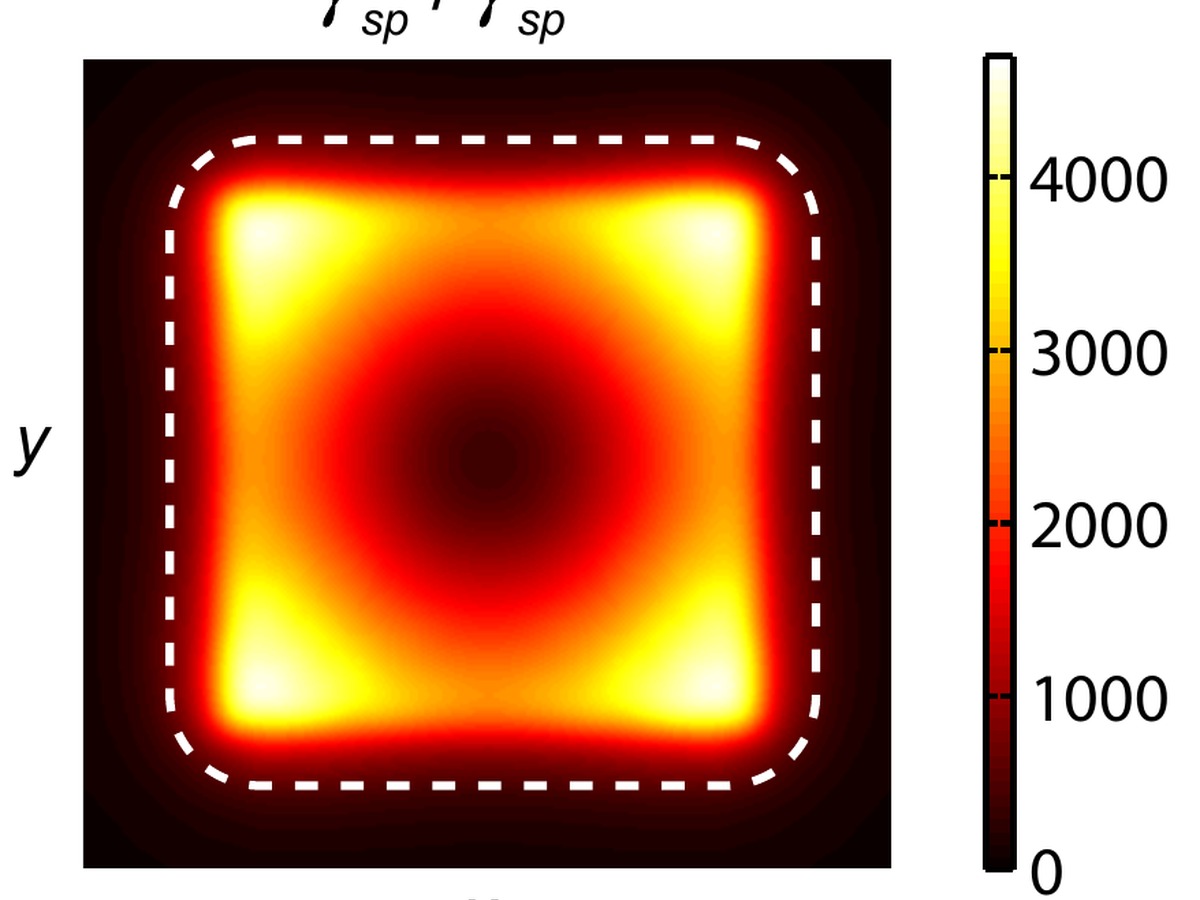
Map of the spontaneous emission rate enhancement beneath a silver nanocube on a gold film, reaching four thousand times the free-space rate near the cube edges.

Where extreme enhancement comes from

Film-coupled nanocube cavities enhance the emission rate of embedded emitters more than a thousandfold while keeping the light bright and directional. This work identified the mechanisms behind the enhancement and established the platform that underlies everything the group does.

Akselrod et al., Nature Photonics 8, 835 (2014) · Read the paper
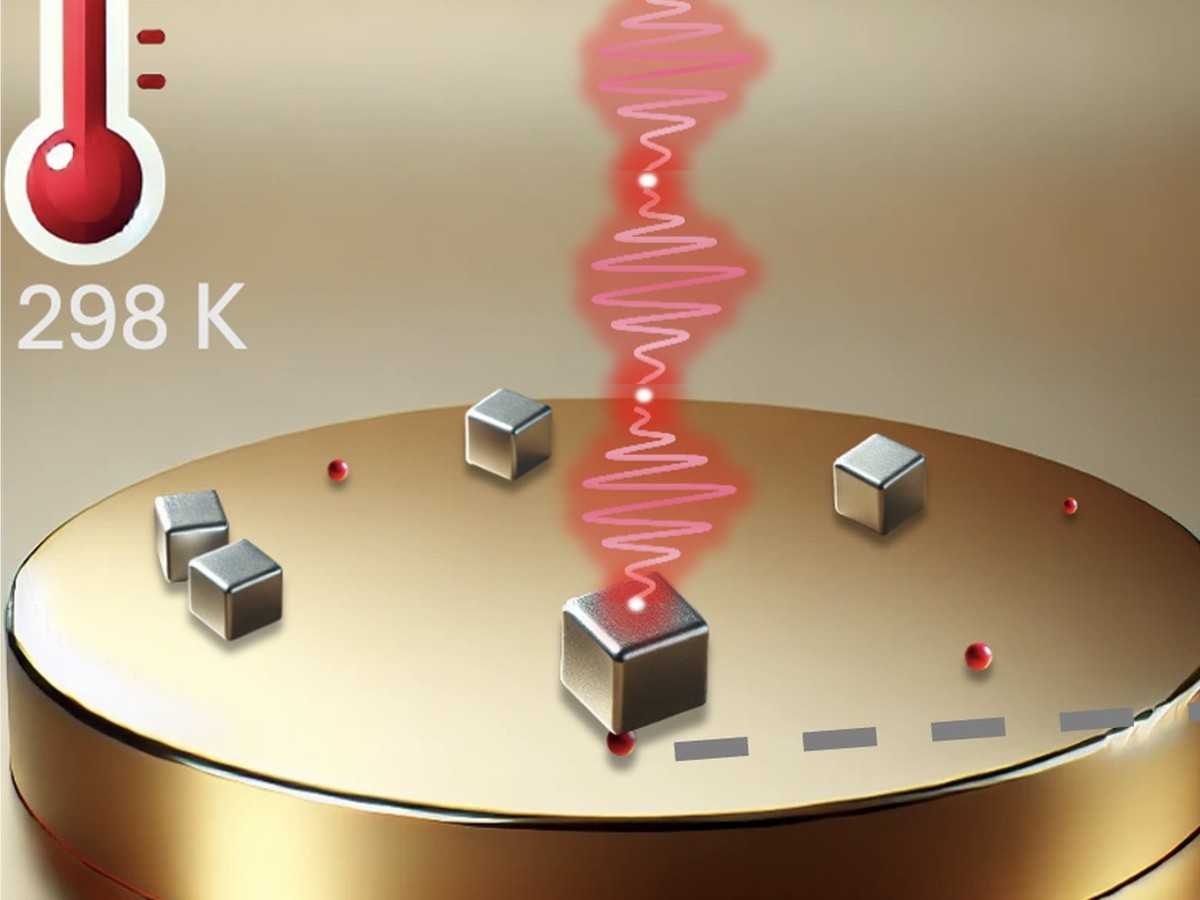
Rendering of silver nanocubes on a gold film with a 1550 nm pulse, labelled 298 K — room-temperature telecom single-photon emission.

Ultrafast single photons at telecom wavelengths

A single colloidal quantum dot in a nanogap cavity emits single photons at 1550 nm with a lifetime of a few picoseconds — a radiative rate enhanced more than 10,000-fold while keeping half its quantum efficiency — at room temperature and made entirely from solution-processed components.

Zhang et al., ACS Nano 19, 19035 (2025) · Read the paper

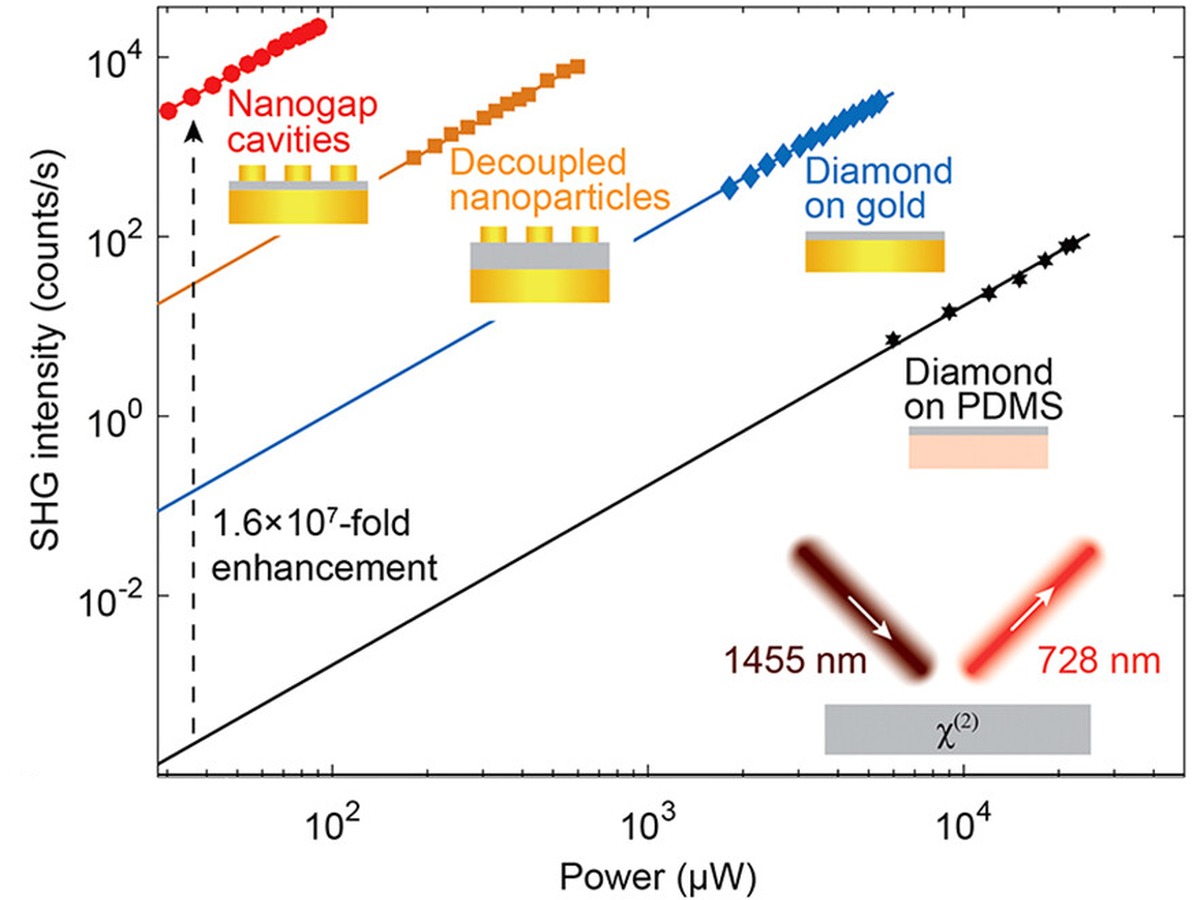
Second-harmonic intensity against pump power for diamond in nanogap cavities compared with three controls, showing enhancement of sixteen million fold.

Second-harmonic light from a material that has none

Diamond is centrosymmetric and has no bulk second-order nonlinearity. Inside nanogap cavities, a diamond film only 12 nanometers thick becomes a bright source of second-harmonic light, enhanced ten-million-fold, while several nonlinear processes run in the same cavity at once — a nanoscale frequency converter in a material that should not be one.

Shen et al., Nanophotonics 10, 589 (2021) · Read the paper

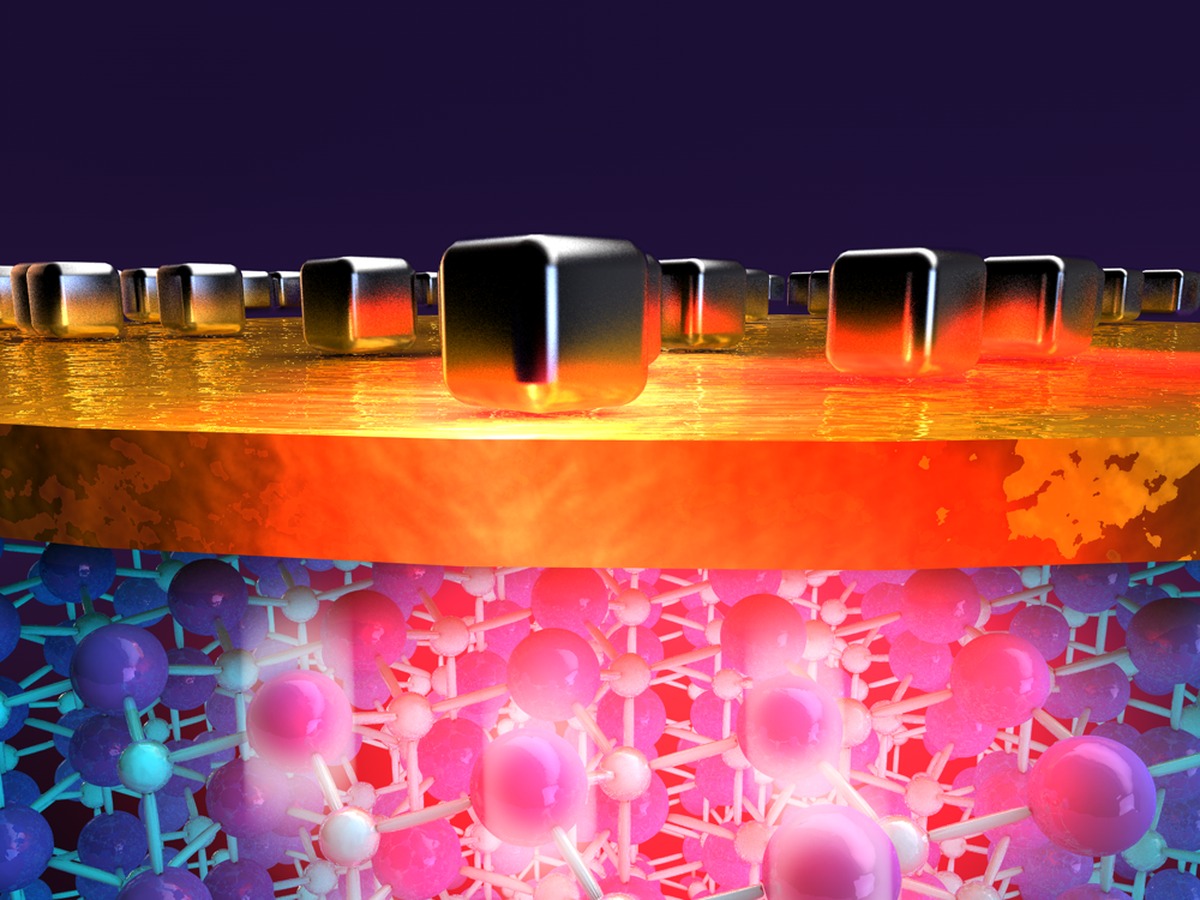
Rendering of silver nanocubes on a gold film, with the pyroelectric crystal lattice beneath heating and glowing.

Making a slow material ultrafast

Pyroelectric detectors are limited by how fast heat can move. By structuring the absorber as a metasurface only nanometers thick, we made a pyroelectric photodetector with sub-nanosecond response and built-in spectral selectivity — and have since pushed the same idea to gigahertz speeds.

Stewart et al., Nature Materials 19, 158 (2020); Shin et al., Adv. Funct. Mater. 36, 2420953 (2026) · Read the paper

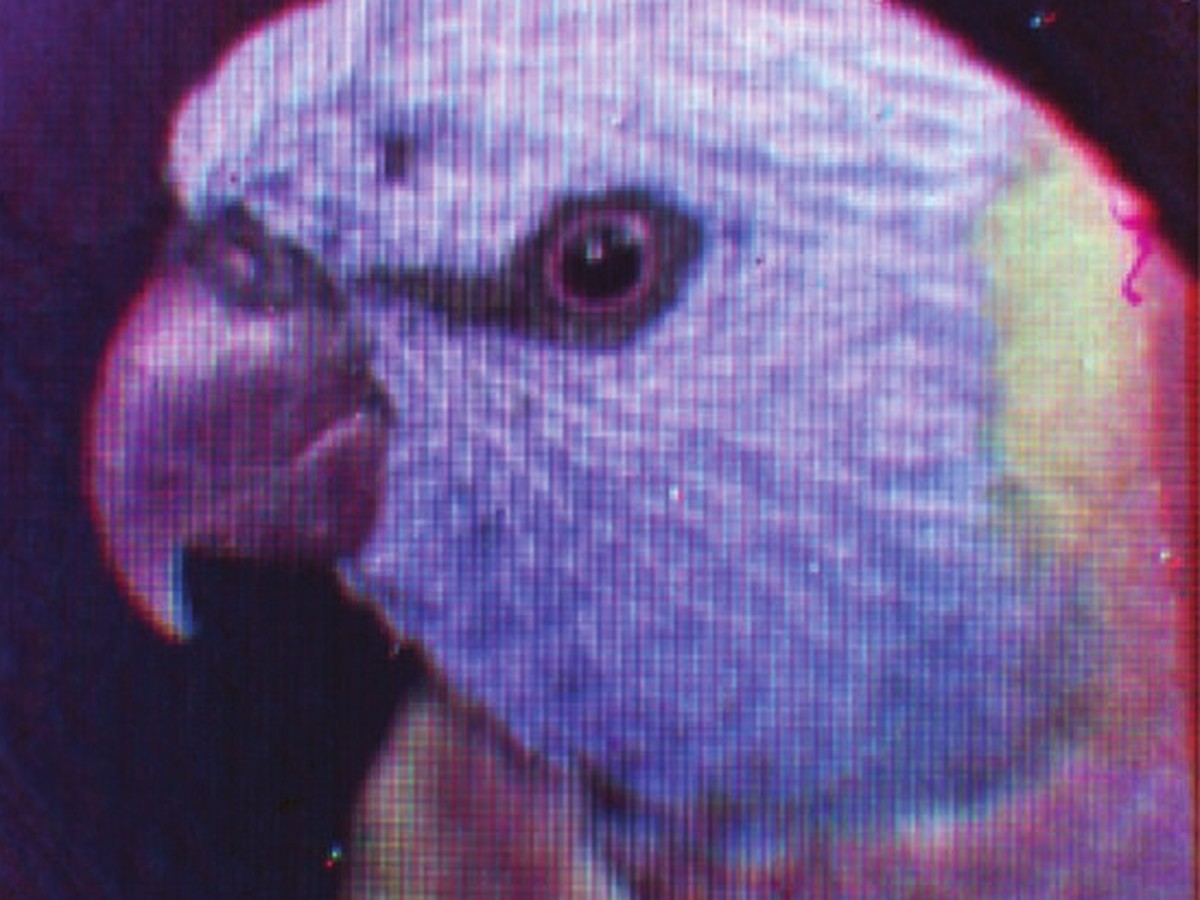
A parrot's head reconstructed in false color from micrometer-scale plasmonic metasurface pixels, 2 mm across.

Printing images in nanocube pixels

Silver nanocube metasurfaces patterned into micrometer-scale pixels, with six resonances spanning the visible and near-infrared, can be combined into 9,261 colors — enough to reconstruct a photograph in absorption at 560 dpi. The bird above is 2 mm across and made entirely of nanoscale cavities.

Stewart et al., Advanced Materials 29, 1602971 (2017) · Read the paper

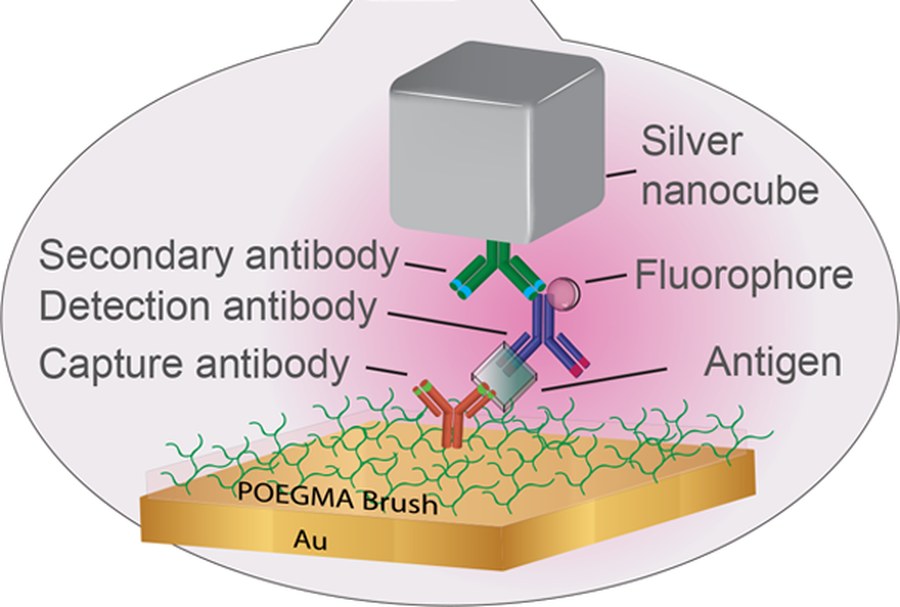
Schematic of an inkjet-printed antibody sandwich assay on a polymer brush over gold, capped by a silver nanocube that forms a nanogap cavity around the fluorophore.

Ultrabright readout for point-of-care diagnostics

An inkjet-printed immunoassay for the cardiac biomarker BNP, built directly inside nanogap cavities: antibodies on a nanometer-thin polymer brush over gold, capped with silver nanocubes. The cavity brightens the fluorescence more than a hundredfold, so inexpensive point-of-care readers can do the job of a laboratory scanner. With Ashutosh Chilkoti’s group; supported by an NIH R01.

Cruz et al., Nano Letters 20, 4330 (2020) · Read the paper