Research

Four questions

Nanophotonics has traditionally asked how strongly an optical process can be enhanced. We ask a different question: can an electromagnetic environment beyond anything found in nature create behavior that could not exist otherwise? Our work is organized around four questions.

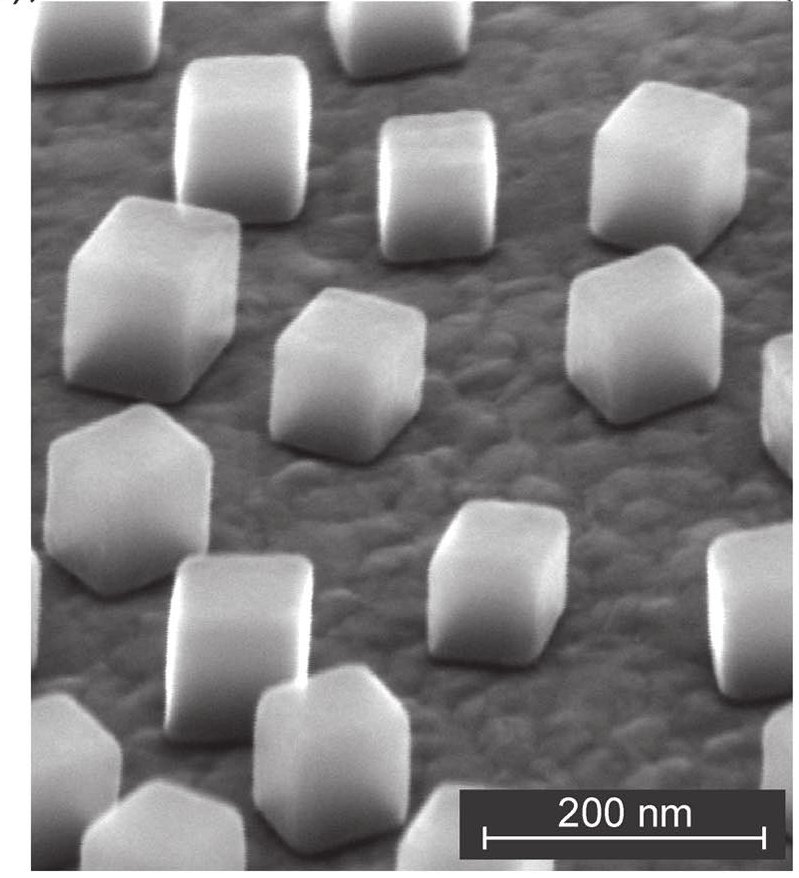
Scanning electron micrograph of silver nanocubes standing on a gold film.

Atomic-scale nanophotonics

How small can an optical cavity become — and what changes when it does?

We design and fabricate optical cavities with gaps of a few nanometers, where light is confined to volumes millions of times smaller than a cubic wavelength. In this regime the usual rules of light–matter interaction stop applying.

Explore this area
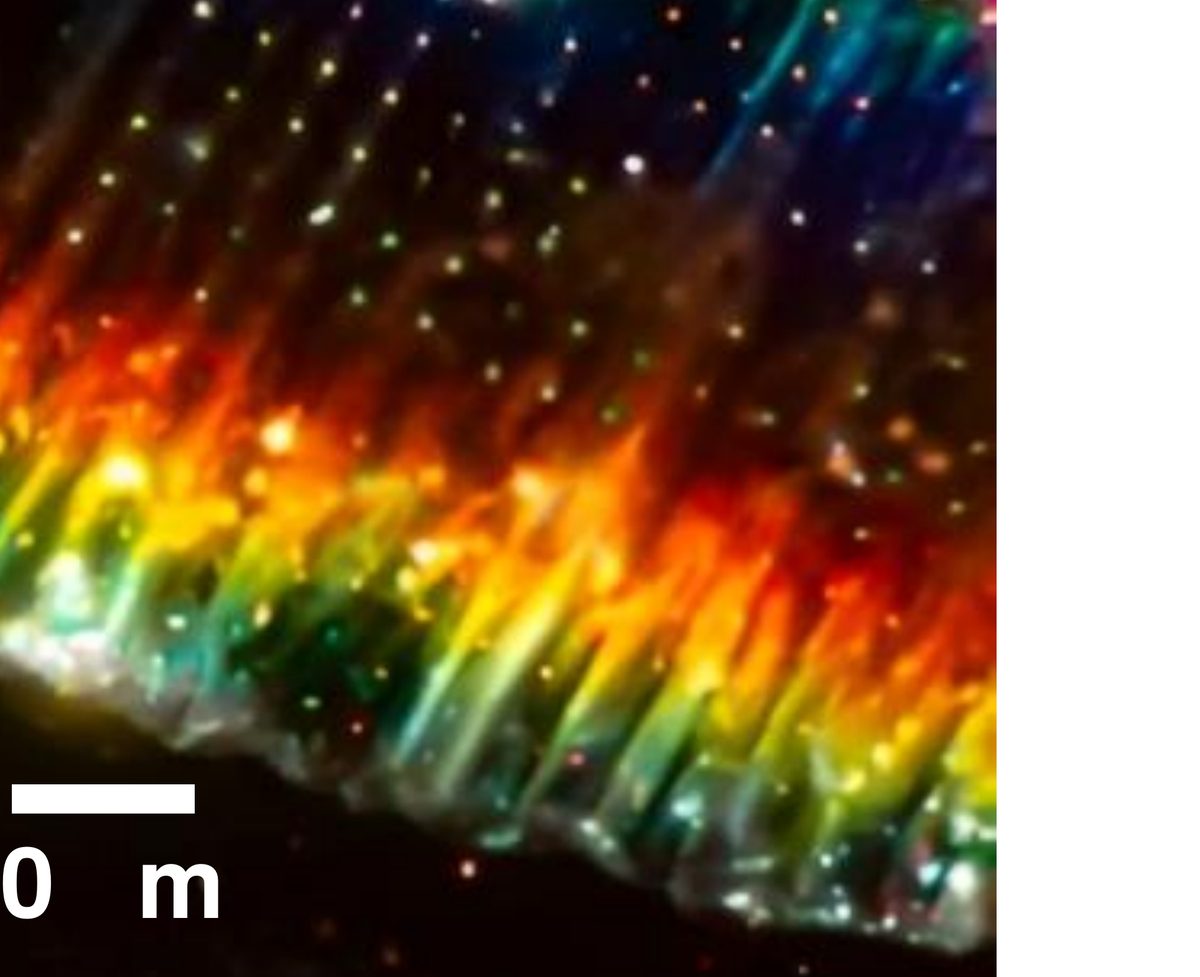
Dark-field micrograph of the edge of a thin diamond membrane, showing interference colors and bright points from individual emitters.

Quantum light–matter interactions

What can a single emitter do when the vacuum around it is engineered?

We place exactly one, two, or several quantum emitters inside nanogap cavities and study how the cavity rewrites their interaction with the vacuum. In this way we have made single-photon sources at telecom wavelengths with emission lifetimes of a few picoseconds.

Explore this area
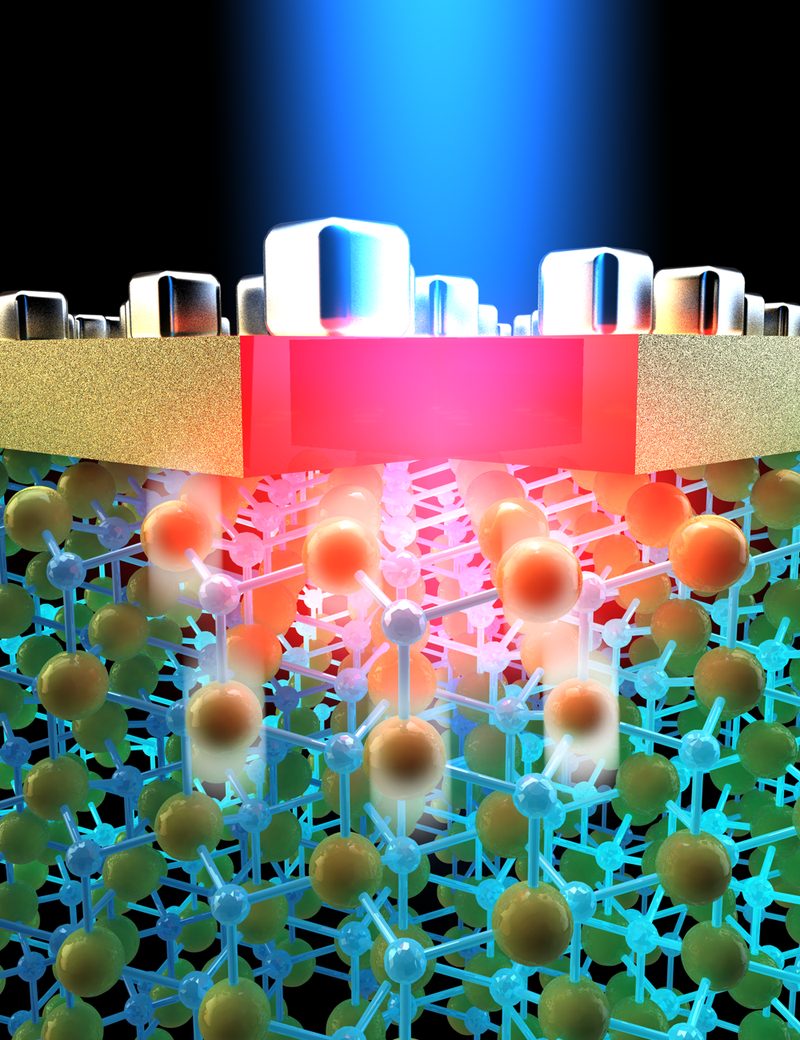
Rendering of a beam of light striking silver nanocubes on a gold film, with the crystal lattice beneath glowing.

Nonlinear and ultrafast photonics

What happens to light and matter on femtosecond timescales in an extreme field?

Extreme confinement creates enormous fields, gradients, and energy densities in nanoscale volumes. In our nanogap cavities, a few nanometers of ordinary dielectric become an efficient source of harmonic generation.

Explore this area
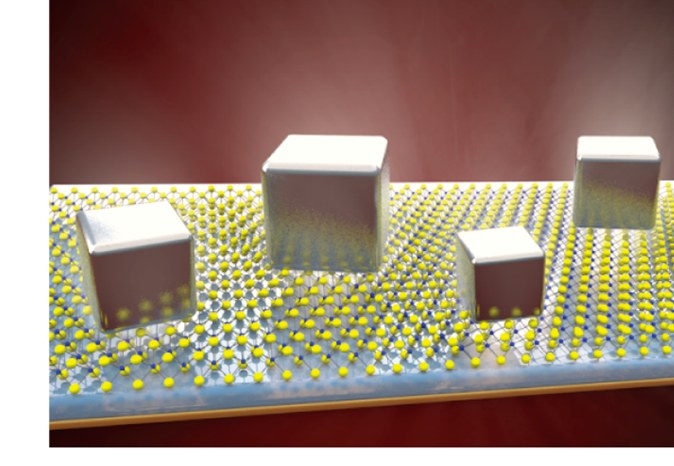
Illustration of silver nanocubes on a monolayer of MoS2 over a gold film, forming nanogap cavities around the two-dimensional material.

Cavity quantum materials

Can an electromagnetic environment change what a material is?

Materials are usually chosen for their intrinsic properties. We explore the reverse — an environment that activates behavior the material cannot show on its own.

Explore this area

Beyond the four questions

The same nanogap platform has practical uses we have pursued with collaborators: ultrafast, spectrally selective photodetectors; metasurfaces for sensing and computing, developed in the eight-university Meta-Imaging MURI; and fluorescence-enhancing surfaces for point-of-care biomedical diagnostics, developed at Duke under an NIH R01 program with clinical partners. We are open to collaborations that bring the platform to sensing, imaging, and diagnostics, and welcome contact from Copenhagen's biomedical and health-technology community.